The low-code development is changing fast. That’s for sure. Pro-code developers no longer see it as a practice that only empowers citizen developers or junior programmers. But what are the factors that influenced the shift in their mindset and development philosophy?
Continuous delivery no longer has to be complex or resource-heavy. With low-code platforms like App Builder, teams can fast-track development, automate prototyping, testing, and deployment, and leverage AI capabilities, making releases faster and more reliable.
AI code generation is powerful. It’s fast, flexible, and great for tackling isolated coding challenges or exploring ideas. But it’s not a silver bullet. Relying on it alone for complex, scalable, or production-grade applications comes with tradeoffs in consistency, security, and collaboration. That’s where tools like App Builder come in.
Many organizations in healthcare, finance, etc. have specific needs around security, cost control, performance-sensitive workloads, or integration when using certain technology and platforms. Some of them opt for cloud-based solutions. Others find that the cloud alone doesn’t fully meet their operational or regulatory requirements. This is where on-premise development and App Builder On-Prem come into play.
It’s not the end of the human role in app development. The software industry is still far from being completely overtaken by AI-assisted development, removing the need for developers. On the contrary, AI in software development serves as a complementary technique that extends human capacity while opening space for strategies, creativity, and efficiency.
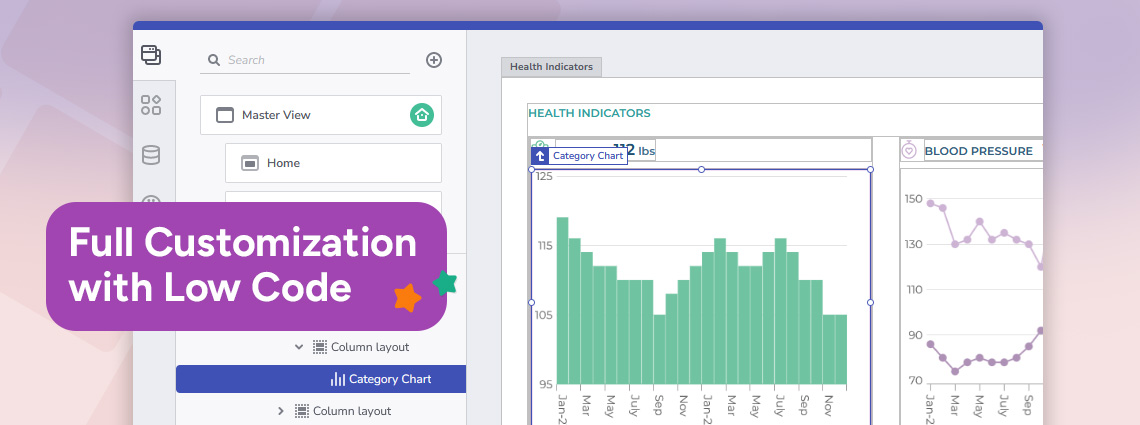
The concept of low-code development has existed since the emergence of 4GLs (Fourth-Generation Programming Languages) that were developed from the 1970s through the 1990s. But ever since then low code has been evolving. The tools we see today are more comprehensive and empower users with full low-code customization.
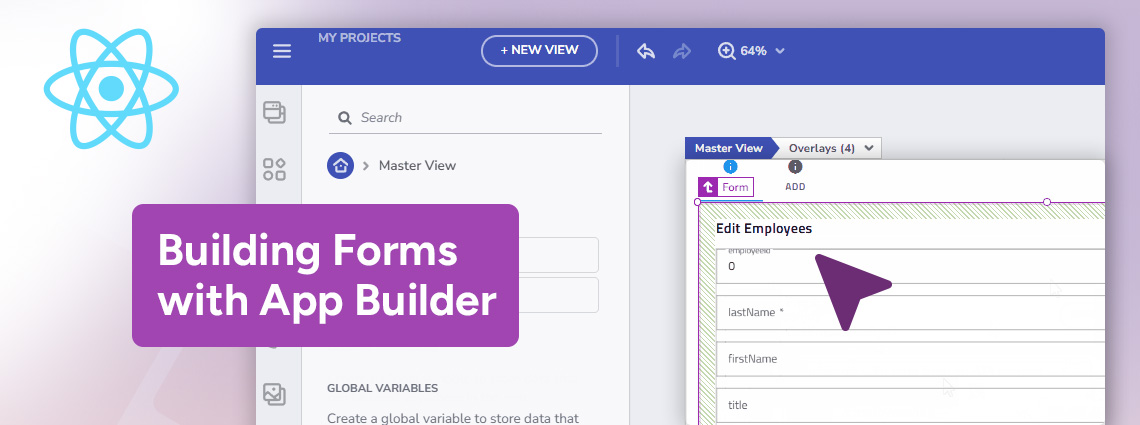
App Builder streamlines anything from design to code, and with the recently introduced Form Builder functionality and its intuitive drag-and-drop interface, creating forms now happens faster and more efficiently than ever before.
Your low-code platform must provide code flexibility so your company can build tailored solutions that go beyond basic features. Read more about the benefits.
Low-code development ensures business agility and code flexibility. Some tools, though, present vendor lock-in risks. Read more here and see how you can avoid them.